Understanding your tractor's power take-off (PTO) shaft is crucial for preventing costly breakdowns and ensuring safe operation. This guide provides a practical, step-by-step approach to understanding, maintaining, and troubleshooting PTO shafts, empowering you to keep your farm running smoothly. For more in-depth information, check out this comprehensive PTO guide.
Tractor PTO Shaft Types: A Comprehensive Guide
PTO shafts are vital for powering various implements, from balers to tillers. Misunderstanding or neglecting them can lead to expensive repairs and serious injuries. This section covers the fundamentals of PTO shaft types and maintenance.
PTO Shaft Speeds: 540 RPM vs. 1000 RPM
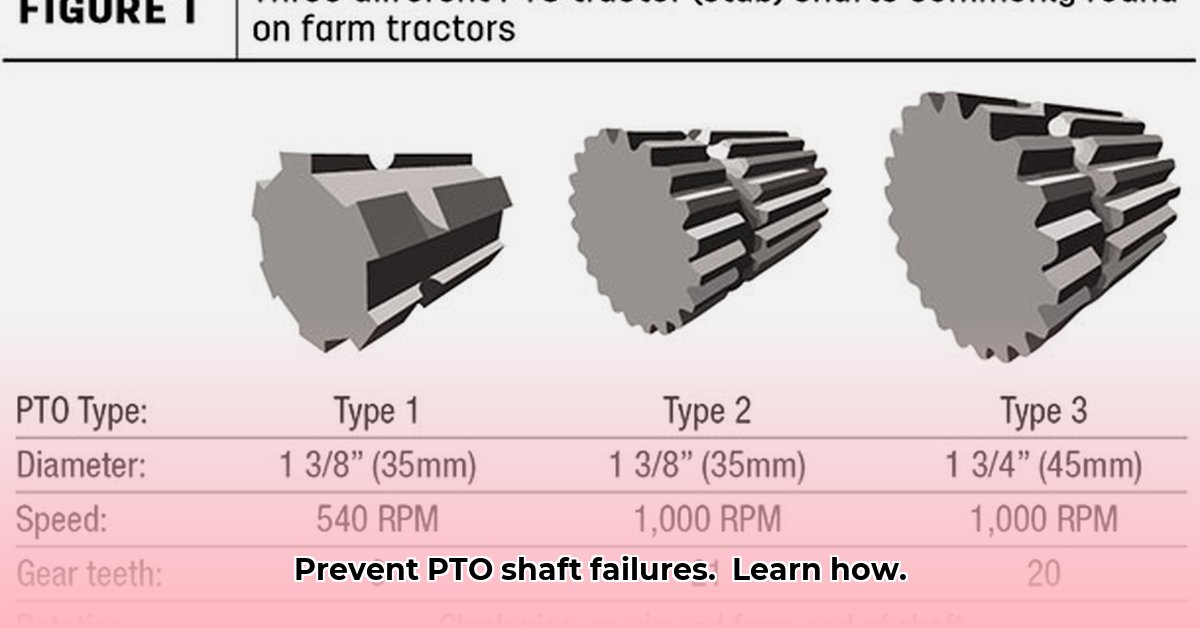
Most tractors offer two standard PTO speeds: 540 revolutions per minute (RPM) and 1000 RPM. 540 RPM is suitable for many tasks, while 1000 RPM provides higher power for demanding applications. Always check your tractor's manual to confirm the correct PTO speed for your model. Incorrect speed matching can damage equipment and void warranties.
Matching PTO Shafts to Implements: Size and Splines
Beyond speed, the size and spline count (the grooves on the shaft) must match both your tractor and implement. Using incompatible shafts can cause catastrophic failure. Always verify compatibility before connecting any implement. Ignoring this essential step may cause serious injury.
Identifying Your PTO Shaft: A Visual Inspection
Before maintenance, identify your shaft's type and specifications. Information such as speed (540 or 1000 RPM), spline count, and length are usually stamped on the shaft or detailed in your owner's manual. Perform a thorough visual inspection checking for bends, cracks, and excessive wear. Addressing these issues promptly can prevent costly breakdowns. A worn shaft is a liability.
Maintaining Your PTO Shaft: A Step-by-Step Guide
Regular maintenance is key to preventing PTO shaft failures. Following these steps will greatly extend the life of your PTO shaft:
Visual Inspection (Before Each Use): Thoroughly inspect the shaft for bends, cracks, excessive wear, or loose components. Replace any damaged parts immediately. A damaged shaft is a waiting disaster.
Lubrication (Every 8 Hours): Proper lubrication is crucial. Consult your manual for the recommended lubricant and lubrication schedule. Keeping the shaft clean and lubricated prevents dirt and debris from causing damage. Neglecting lubrication leads to premature wear.
Universal Joint (U-Joint) Inspection: Inspect U-joints for excessive play or wear. Replace worn U-joints promptly to avoid catastrophic failure. Keep the operating angle under 45 degrees to maximize the U-joint life.
Shear Pin Check: Regularly inspect shear pins, safety devices designed to break before major damage occurs. A broken shear pin is a much cheaper and safer fix than a destroyed gearbox.
Slip Clutch Check: Ensure the slip clutch, another safety device, is functioning correctly. Replace or adjust it if necessary. The slip clutch can be your best friend in a jam.
Troubleshooting Common PTO Shaft Problems: Solutions and Prevention
Even with regular maintenance, problems can arise. Here's how to address them:
Excessive Vibration: This usually indicates worn U-joints, an unbalanced shaft, or misalignment. Address these issues immediately. Ignoring vibration is a recipe for disaster.
Sudden Shaft Failure: This suggests that either the shaft is mismatched or a safety device has failed. Proper shaft selection and maintenance are critical.
Binding or Sticking: Check lubrication levels, inspect for bent parts, and check for potential misalignment issues. These small problems can snowball.
Safety First: Essential PTO Shaft Precautions
PTO shafts involve moving parts under significant power. Always follow these safety precautions:
Disengage the PTO: Before any work, always disengage the PTO to prevent unexpected movement. This is your first line of defense.
Avoid Loose Clothing: Never wear loose clothing or jewelry near moving parts. These could easily get caught and cause serious injury.
Careful Connection: Use extreme caution when connecting or disconnecting implements to avoid accidents. Take your time and ensure a secure connection.
Adequate Guarding: Ensure that the PTO shaft is adequately guarded to prevent accidental contact. Safety is non-negotiable.
Key Takeaways:
- Regular lubrication is critical to PTO shaft longevity and safety.
- Proper shaft length is essential to prevent binding and stress.
- Understanding PTO types (transmission, live, independent) is critical for effective troubleshooting.
- Safe operational practices are paramount to accident prevention.
- Proactive maintenance minimizes downtime and maximizes efficiency.
PTO Shaft Types: A Detailed Comparison
| PTO Type | Description | Pros | Cons |
|---|---|---|---|
| Transmission PTO | Engaged and disengaged with the tractor's transmission. | Simple design, fewer components. | PTO operation is dependent on tractor movement. |
| Live PTO | Independently engaged and disengaged. | Allows for independent PTO operation while the tractor moves. | More complex, with more potential points of failure. |
| Independent PTO | Similar to live PTO, offering even greater control and flexibility. | Offers highest flexibility for complex operations. | Most complex, and most costly. |
Regular maintenance, proper lubrication, and a mindful approach to operation will keep your PTO shafts running smoothly and safely for years to come. Remember, prevention is far more cost-effective than repairs.